
Upskilling vs. Reskilling: Navigating Career Transitions in the Age of AI





Ad Spot Availabe




(hr)
(h1)Understanding the Difference(/h1)
Upskilling involves deepening expertise in your current field while adding (link=https://www.mckinsey.com/capabilities/mckinsey-digital/our-insights/superagency-in-the-workplace-empowering-people-to-unlock-ais-full-potential-at-work)complementary AI-related capabilities.(/link) A marketing professional might learn data analytics and AI-powered campaign optimization tools. An accountant could master automated bookkeeping systems and AI-driven financial forecasting. This approach builds on existing knowledge while future-proofing your role.
(hrr)
(h1)When Reskilling Makes Sense(/h1)
Reskilling represents a more dramatic shift—acquiring entirely new competencies to transition into different roles or industries. A retail manager might reskill to become a data analyst, or a traditional journalist might transition into AI content strategy. This path requires more time and investment but can lead to higher growth potential.
(hr)
(h1)Making the Strategic Decision(/h1)
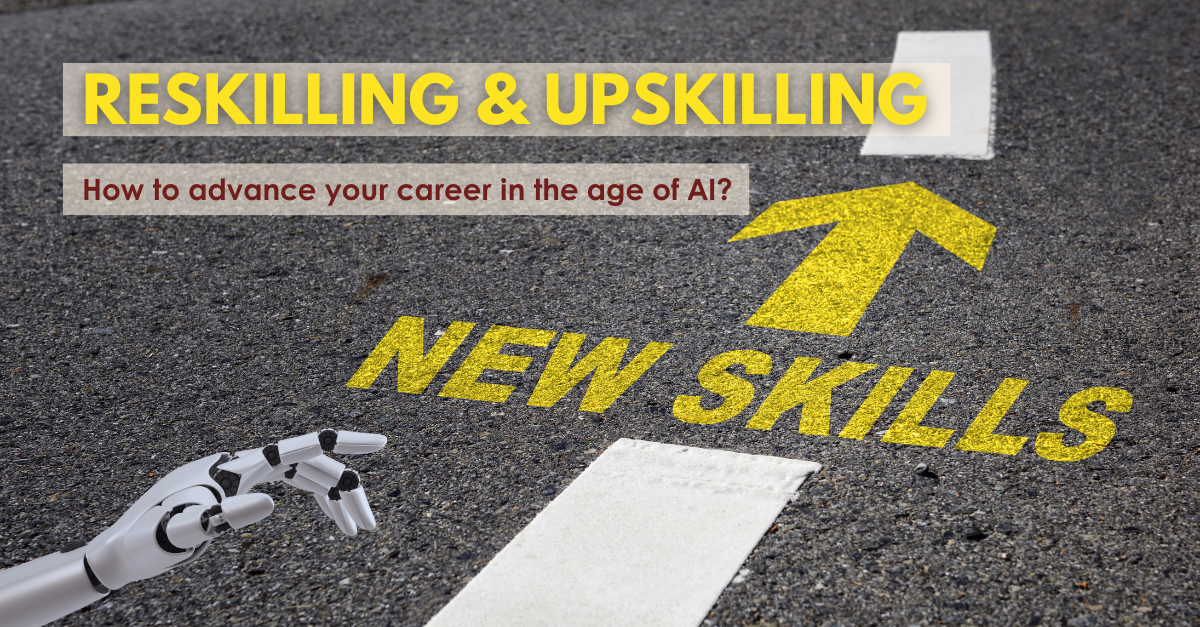
(img=https://jobserver.ai/aduploads/image1_68ad92d371a0e.png)The decision between upskilling and reskilling depends on several factors.(/img) Consider your current industry's AI adoption rate. Manufacturing, finance, and healthcare are rapidly integrating AI, making upskilling often sufficient. However, if your field faces significant AI displacement—like certain administrative or routine analytical roles—reskilling might be necessary.
(hrr)
(h1)Personal Factors to Consider(/h1)
Personal factors matter equally. Your learning style, risk tolerance, and financial situation influence which path makes sense. Upskilling typically allows continued employment while learning, whereas reskilling might require career breaks or temporary income reduction.
(hr)
(h1)The Hybrid Approach(/h1)
(img=https://jobserver.ai/aduploads/image2_68ad92d388463.jpg)The most effective approach often combines both strategies.(/img) Start with upskilling to remain relevant in your current role while gradually building capabilities for potential reskilling opportunities. This hybrid approach provides security while positioning you for future transitions.
(hr)
(h1)Learning Resources and Employer Support(/h1)
Online learning platforms have made both (link=https://www.weforum.org/stories/2025/04/linkedin-strategic-upskilling-ai-workplace-changes/)upskilling(/link) and reskilling more accessible than ever. Coursera, edX, and specialized platforms offer everything from AI fundamentals to advanced machine learning certifications. Many programs are designed for working professionals, offering flexible schedules and practical, immediately applicable skills.
(hrr)
(h1)Strategic Planning for Success(/h1)
The key to successful upskilling or reskilling is strategic planning. Identify the specific AI technologies and methodologies most relevant to your target roles. Focus on areas where human expertise remains crucial: creativity, complex problem-solving, and relationship management, while developing (link=https://www.pwc.com/gx/en/issues/c-suite-insights/the-leadership-agenda/AI-jobs-impact.html)competency with AI tools.(/link)
#CareerGrowth #FutureOfWork #AIJobs

Category:
Other
Region:
North America
Author:
foradserver@gmail.com
Ad link: