

The Quiet Pivot of Global Oil Giants to Data and Surveillance Powerhouses





Ad Spot Availabe




(hr)
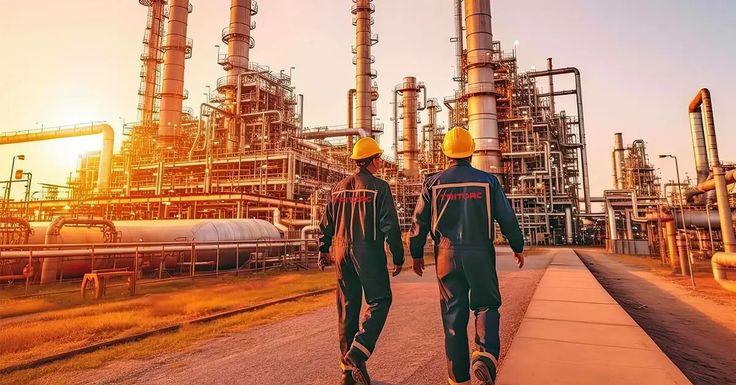
(pic=https://jobserver.ai/aduploads/image1_68d53985326be.jpg)QUIET OIL GIANTS STRATEGIES FOR DIVERSIFICATION OF PORTFOLIOS(/pic)
(h2)The Digitalization Imperative: From Oilfield to Datafield(/h2)
The initial phase of the digital transformation was framed internally as an efficiency drive, a necessary optimization of existing operations. However, this has quickly expanded into a complete transformation of the business model.
(h3)Real-Time Surveillance and the Internet of Things (IoT)(/h3)
Oil and gas operations are inherently dangerous and complex. To improve safety, optimize production, and reduce environmental risks like methane leaks, companies like ExxonMobil and Chevron have deployed extensive networks of sensors, often referred to as the Industrial Internet of Things (IIoT). Modern offshore drilling platforms can contain tens of thousands of sensors, generating petabytes of real-time data over their lifespan. This data flood, tracking pressure, temperature, flow rates, equipment vibration, and even worker movement, is fed into cloud-based platforms and analyzed by advanced Artificial Intelligence (AI) and Machine Learning (ML) models. This real-time, comprehensive monitoring creates a powerful surveillance capability that allows companies to see and predict anomalies across thousands of miles of assets, effectively turning the entire global operation into a single, cohesive, self-monitored organism.
(h3)The Digital Twin Advantage(/h3)
This data collection is fueling the (link=https://jobserver.ai/adserved?id=424&The+Rapid+Rise+of+Parallel+Worlds+Fueled+by+the+Creation+of+Digital+Twins)creation of "digital twins", virtual replicas of physical assets like refineries, wells, and entire pipelines.(/link) Engineers can test operational scenarios, predict equipment failures, and optimize production without ever setting foot on-site, a process known as autonomous production. While the stated goal is efficiency and safety, the capability developed to create and manage these hyper-accurate, real-time digital replicas represents a massive leap in sophisticated data management and predictive intelligence, a capability that is highly transferable to other infrastructure-heavy sectors, from smart city planning to utility grid management.
(hr)
(h2)Repurposing Legacy Assets for Digital Dominance(/h2)
The Supermajors are also capitalizing on their existing physical assets and deep pockets to gain an advantage in the purely digital realm.
(h3)Fueling the Data Center Boom(/h3)
The AI revolution and the explosion of cloud computing require exponentially more power, creating a new and unexpected market opportunity for energy producers. Data centers, which house the digital infrastructure of the global economy, are energy-hungry, demanding highly reliable and scalable power sources. Gas transmission companies and oilfield service providers are now finding new business in partnering with data center developers to build on-site power generation plants, often fueled by natural gas, near the data centers themselves. This strategic vertical integration transforms them from mere commodity suppliers into critical infrastructure providers for the most powerful technology companies in the world. They are leveraging their existing pipeline infrastructure, land ownership, and expertise in high-capacity power generation to become the foundation upon which the future of AI is built.
(h3)The Geopolitical Network and Global Reach(/h3)
Decades of global presence have endowed energy companies with unparalleled geopolitical reach and control over vast stretches of land and sea. This existing footprint, the same corridors used for pipelines and shipping lanes, can be repurposed for digital infrastructure, such as laying fiber-optic cables or establishing distributed edge computing sites. This global network of physical control provides a distinct advantage over pure-play technology companies, blending the power of industrial logistics with the speed of digital connectivity.
(hr)
(vimeo=https://vimeo.com/1121666493)(/vimeo)
(h2)The Ethics of the Information Empire(/h2)
The quiet pivot of global energy giants into data and surveillance powerhouses raises critical ethical and societal questions.
(h3)Merging Industrial and Information Power(/h3)
The core concern lies in the merging of industrial monopolistic power with centralized information and surveillance capability. A company that controls a significant portion of the world's energy supply, and also possesses high-resolution, real-time data about critical infrastructure, supply chains, and environmental conditions across multiple continents, wields a dual-edged form of corporate control. (quote)The vast amounts of data collected, initially for optimizing oil wells, represent an unprecedented level of real-time intelligence that could be applied far beyond a refinery gate, potentially intersecting with government and military intelligence operations.(/quote)
This strategic diversification is not just about mitigating climate risk; it is about ensuring that even as the world transitions away from fossil fuels, the corporate titans who mastered the last century of energy maintain their power by mastering the next century of #DigitalInfrastructure and #CorporateSurveillance. The Supermajors are determined to remain at the core of the global economy, simply by replacing oil with data as their most valuable commodity.


Category:
Other
Region:
North America
Author:
blog@Jobserver.ai
Ad link: