

Biocomputing: The Rapid Rise of DNA-Based Machines and Living Computers





Ad Spot Availabe




The relentless march of Moore's Law, which predicted the doubling of transistors on a chip every two years, has powered everything from supercomputers to smartphones. But this era is now reaching its physical and technical limits. As transistors shrink to the atomic scale, the laws of physics are beginning to impose insurmountable barriers to further progress. In the face of this looming digital crisis, the scientific community is turning to a completely new paradigm for computation, one that is not based on metallurgy, but on biology. The emerging field of #biocomputing, which uses living biological cells and DNA as the medium for information storage and processing, promises (link=https://jobserver.ai/adserved?id=328&Digital+Immortality%3A+Preserving+and+Maintaining+Human+Consciousness+in+Data)a future where computers are not cold, lifeless machines but living, breathing, and self-replicating organisms.(/link) This is not science fiction; it is the next frontier of computing, one that promises to solve the critical challenges of data storage and processing with an elegance and efficiency that will far outlast traditional silicon chips.
(hr)
(h2)The Digital Crisis and a Biological Solution(/h2)
The limitations of silicon-based computing are becoming increasingly apparent. The massive data centers that power our digital lives require colossal amounts of energy and produce a tremendous amount of heat. As the volume of global data continues to explode, our current infrastructure is simply not sustainable.
(h3)The Energy and Longevity Problem(/h3)
Traditional hard drives and flash memory consume significant energy and have a limited shelf life. Data centers require constant power and cooling, and a single hard drive can become corrupted or fail within a decade. With the world generating an estimated 2.5 quintillion bytes of data per day, a more sustainable and durable solution is desperately needed. The biological world, in contrast, offers a powerful and elegant answer to this problem. DNA, the building block of life, is an incredibly dense and long-lasting storage medium. A single gram of DNA can theoretically store more data than all the digital data created in a year. Furthermore, DNA can survive for thousands of years, as evidenced by its use in paleontological and archaeological research. This longevity and density make it the perfect medium for a new kind of computer.
(hr)
(vimeo=https://vimeo.com/1118425249)(/vimeo)
(h2)How DNA Stores and Computes Information(/h2)
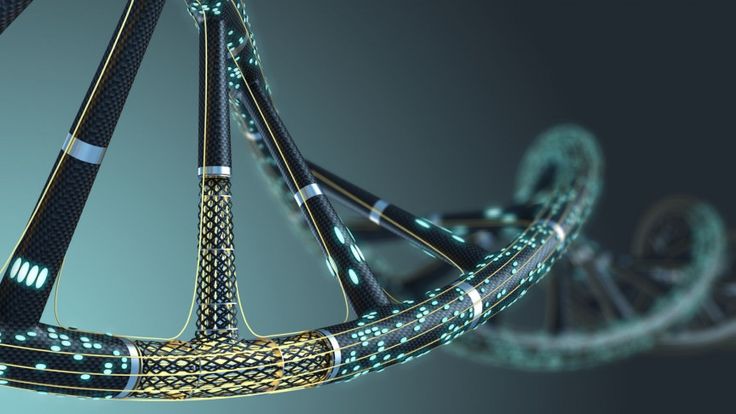
The fundamental principle of biocomputing is to encode data into the four nucleotides of a DNA strand: adenine (A), guanine (G), cytosine (C), and thymine (T). These four bases act as a biological alphabet for data, with combinations of them representing binary code.
(h3)Encoding and Retrieval(/h3)
To store data, a digital file is first converted into a binary code of 1s and 0s. This code is then translated into a sequence of DNA bases, where A and C might represent a 0, and G and T might represent a 1. This sequence is then synthesized into a strand of DNA. To retrieve the data, the DNA is sequenced and the process is reversed, with the sequence of A, T, C, and G being translated back into binary and then into the original digital file. This process is already being used in labs around the world to store data, from classic literature to full-length movies.
(h3)The Logic of Living Computers(/h3)
Beyond simple data storage, researchers are also building living computers, or "biocomputers," that can perform calculations and solve problems. These are not DNA storage drives but living systems that can perform logical operations. A simple biocomputer might consist of a series of genetic circuits that, when a specific molecule is introduced, react in a predetermined way. For example, a genetic circuit could be designed to act as a logic gate (like an "AND" or "OR" gate) that only produces an output protein when a certain combination of inputs is present. (link=https://jobserver.ai/adserved?id=247&Genomic+Data%3A+The+Next+Frontier+of+Corporate+Concentration)By chaining together thousands of these genetic circuits, scientists can create a powerful and parallel computing system that can perform complex calculations inside a living cell.(/link) This is a true #biocomputing revolution.
(hr)
(img=https://jobserver.ai/aduploads/image2_68be33757e243.jpg)CONSCIOUSNESS FINDINGS(/img)
(h2)From Theory to Reality: The Applications(/h2)
While still in its infancy, biocomputing holds immense promise for a wide range of fields, from medicine to data archiving.
(h3)Medical and Pharmaceutical Breakthroughs(/h3)
One of the most exciting applications is in the field of medicine. Living computers could be engineered to act as "medical detectives" within the body. A biocomputer, designed to detect specific markers of a disease like cancer, could be programmed to release a therapeutic drug only when it identifies those markers. This would allow for a highly targeted and efficient form of treatment, with fewer side effects. Biocomputing could also be used to create personalized medicines that are tailored to an individual’s unique genetic makeup.
(h3)Next-Generation Data Storage(/h3)
For the long-term, biocomputing’s most impactful application may be in data storage. As the world produces exponentially more data, the need for a durable, energy-efficient storage solution becomes critical. #DNA data storage could become the primary medium for long-term archiving, with massive amounts of data being stored in a small, stable, and easily transportable format. Companies that need to back up vast archives of information, from government data to historical records, could turn to DNA as a solution to a looming data crisis.
(hr)
(h2)The Ethical and Scientific Hurdles Ahead(/h2)
Despite its promise, biocomputing faces significant challenges that must be addressed before it can become a mainstream reality.
(h3)Technical Challenges and Costs(/h3)
The process of synthesizing and sequencing DNA is still incredibly expensive and time-consuming, though the costs are rapidly coming down. While DNA can store a massive amount of data, the writing and reading of that data is still far slower than a traditional hard drive. Researchers are working on new techniques to speed up both processes, but it will be a major hurdle before DNA computing can compete with silicon for everyday use.
(h3)The Ethical Questions(/h3)
The idea of "living computers" also raises profound ethical questions. What are the moral implications of creating and controlling a living organism for computational purposes? What are the security risks of encoding data into a living system? And what are the long-term consequences of releasing genetically #engineeredorganisms into the environment? These are not simple questions, and the scientific community must work closely with policymakers and the public to ensure that biocomputing is developed in a safe and responsible manner. While we may still be a long way from a world of living, thinking machines, the rapid rise of biocomputing has made it clear that the future of computing is not in the next generation of silicon chips, but in the elegant and powerful logic of life itself.


Category:
Other
Region:
North America
Author:
blog@Jobserver.ai
Ad link: