

The Future of Global Logistics in an Era of High Climate Risk





Ad Spot Availabe




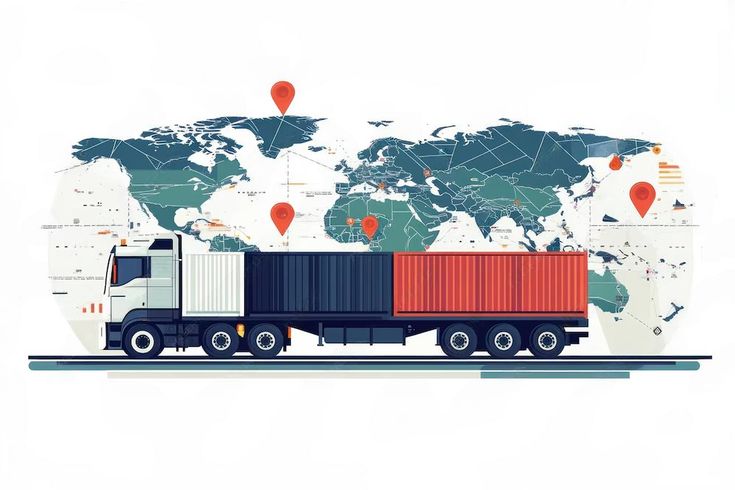
Companies could rely on well-established #traderoutes, predictable weather patterns, and a relatively constant flow of goods from one part of the world to another. This era of certainty, however, has come to an abrupt end. The world is now grappling with the tangible and disruptive effects of a changing climate, and global logistics is on the front lines. From catastrophic floods that submerge ports to heatwaves that buckle railways, the physical infrastructure of global trade is being tested like never before. In response, a silent revolution is underway, forcing companies to move beyond a focus on cost efficiency and embrace a new, more urgent mission: building a resilient and sustainable logistics network that can withstand the shocks of a more volatile planet.
(hr)
(pic=https://jobserver.ai/aduploads/image1_68d37682034ad.jpg) ENVIRONMENTAL LOGISTICS(/pic)
(h2)The Unprecedented Threats to Trade(/h2)
The impact of climate change on global logistics is multifaceted, affecting every mode of transportation and every node in the supply chain. The once-theoretical risks are now a daily reality for companies.
(h3)Threats to Coastal and Inland Infrastructure(/h3)
Rising sea levels and more intense storm surges pose an existential threat to the world’s coastal infrastructure. Many of the planet’s largest and most critical ports are located in low-lying areas, making them highly vulnerable to flooding and long-term inundation. A single major hurricane or storm can shut down a port for weeks, creating a ripple effect of delays and costs that extend across the globe. Inland, extreme weather events like heavy rains, droughts, and wildfires are also wreaking havoc. Floods can wash out roads and railway lines, while droughts in major river systems, such as the Rhine or the Mississippi, can reduce their navigability, forcing barges to carry lighter loads or halt operations entirely. Extreme heat can cause asphalt to buckle and rail tracks to warp, leading to road closures and train derailments. These physical disruptions are no longer isolated incidents but an increasingly common part of the operational landscape.
(hr)
(h2)The Shift Toward Resilience and Diversification(/h2)
In the face of these growing risks, companies are no longer simply reacting to disruptions; (link=https://jobserver.ai/adserved?id=375&Clean+Technology+and+Environmental+Engineering%3A+Solving+Global+Environmental+Challenges)they are proactively rebuilding their supply chains with resilience as a core objective.(/link) This involves a fundamental shift in strategy from single-sourcing to multi-sourcing and from just-in-time inventory to strategic redundancy.
(h3)Rethinking Supplier Networks(/h3)
The traditional model of relying on a single, low-cost supplier in a specific region is now being viewed as a major vulnerability. To mitigate the risk of a single climate event shutting down production, companies are diversifying their supplier base, seeking out multiple suppliers in different geographic regions with varying climate risk profiles. This strategy of "multi-sourcing" or "regionalizing" the supply chain helps ensure that if a drought or flood affects one region, a company has a reliable backup in another. This move away from total cost-efficiency toward a balance of cost and resilience is a defining trend of the new logistics era.
(h3)Leveraging Technology for Visibility(/h3)
Real-time data and predictive analytics are also becoming essential tools in the climate resilience toolbox. Companies are using advanced software and satellite data to monitor weather patterns and track shipments with unprecedented precision. An AI-powered system can, for example, predict that a storm will hit a key port and automatically reroute a shipment to an alternative location, mitigating delays before they even occur. This level of visibility and foresight allows companies to move from a reactive, crisis-driven model to a proactive, risk-management approach. The entire (link=https://jobserver.ai/adserved?id=401&Supply+Chain+and+Logistics+Innovation%3A+Optimizing+Global+Commerce+and+Distribution)supply chain is now being viewed as a dynamic, intelligent system that can adapt and respond to changing conditions in real time.(/link)
(hr)
(img=aduploads/image2_68d32057720f2.png)Advances in logistics technology(/img)
(h2)The Drive for Decarbonization(/h2)
Beyond adapting to physical risks, logistics is also under pressure to meet stringent new carbon regulations and reduce its massive environmental footprint. The transportation of goods accounts for a significant portion of global greenhouse gas emissions, and this is becoming a key target for regulators and consumers alike.
(h3)The Push for Sustainable Logistics(/h3)
Companies are under immense pressure to reduce their carbon footprint throughout the supply chain. This is leading to a push for more sustainable transportation methods, from the use of electric and hydrogen-powered trucks to the adoption of more fuel-efficient ships and aircraft. Carbon taxes and emissions trading schemes are making environmentally conscious choices more economically viable. The logistics industry is also beginning to embrace "carbon accounting," using sophisticated software to track and report on emissions from every stage of a product's journey. This move toward greater transparency and accountability is not just a regulatory requirement but is increasingly seen as a competitive advantage.
(hr)
The future of logistics will be defined not just by how fast goods can be moved, but also by how sustainably they can be delivered.
The future of global logistics will look very different from its past. The era of a seamless and predictable supply chain is over, replaced by a dynamic and complex network that must constantly adapt to a changing climate. While the challenges are immense, they are also driving a new wave of innovation and collaboration, forcing companies to build more resilient, transparent, and sustainable networks for a world where environmental risk is no longer an exception, but the rule. This is a critical #supplychainresilience challenge that will shape the global economy for decades to come.



Category:
Other
Region:
Europe
Author:
blog@Jobserver.ai
Ad link: