

The Intense Drone Delivery Arms Race of Global Retailers





Ad Spot Availabe




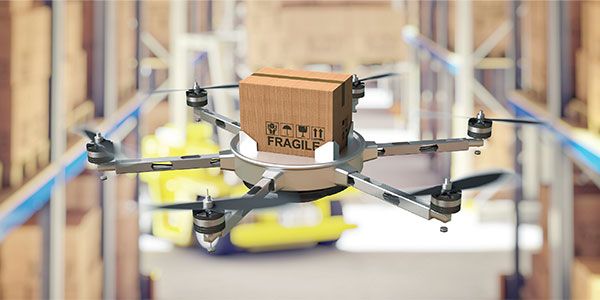
The fierce competition among global retailers to conquer this final frontier has ignited a high-stakes arms race, with the primary weapon being a fleet of autonomous drones. What was once considered a futuristic novelty is now a critical battleground for logistics supremacy. Giants like (link=https://jobserver.ai/company?id=26)Amazon(/link) and (link=https://jobserver.ai/company?id=60&Walmart+Inc)Walmart,(/link) alongside nimble startups and specialized aviation companies, are investing billions in a race to automate the last mile, promising to deliver packages with a speed and efficiency that traditional ground-based methods simply cannot match. This bold experiment is not only reshaping the retail industry but also setting new standards for consumer expectations.
(hr)
(h2)The Last-Mile Problem: A Logistical Puzzle(/h2)
The last mile has long been the bane of logistics and e-commerce companies. It is a complex and often unpredictable puzzle, laden with traffic congestion, residential delivery challenges, and the high cost of human labor.
(h3)Costs and Inefficiencies(/h3)
The high cost of the last mile stems from a combination of factors. Delivery vehicles must navigate traffic, make frequent stops, and contend with a host of logistical challenges in urban and suburban areas. The inefficiency of a driver delivering a single package at a time makes the cost per delivery a significant burden for companies. Traditional delivery also struggles with speed, with even "next-day" shipping often taking 24 hours or more. The last mile is also one of the most carbon-intensive parts of the supply chain, as it relies heavily on fossil fuel-powered vehicles. This has made finding a more efficient and sustainable solution a top priority for major retailers.
(hr)
(h2)The Key Players and Their Strategies(/h2)
In the race to solve the last-mile problem, several major players have emerged, each with a distinct approach to leveraging drone technology.
(h3)The Retail Giants: Amazon and Walmart(/h3)
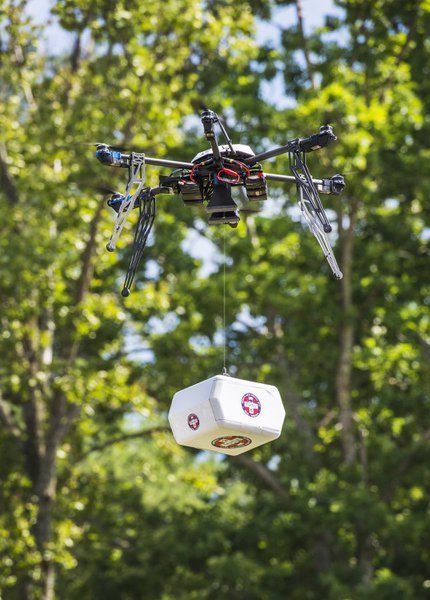
(link=https://jobserver.ai/company?id=26)Amazon,(/link) with its vast logistics network and deep pockets, is leading the charge with its (b)Prime Air(/b) program. The company has invested heavily in the development of its own proprietary drones, with a focus on advanced AI-powered navigation and obstacle avoidance. Amazon’s drones are designed to (link=https://jobserver.ai/adserved?id=329&Amazon%E2%80%99s+Silent+Empire+of+Global+Domination+and+Services+That+Bring+Mainstream+Casuals)operate with a high degree of autonomy, using a combination of cameras and sensors to navigate complex environments and lower packages to the ground with precision, read more on Amazon's dominance.(/link) The company's goal is to offer delivery in under 30 minutes, a speed that would completely redefine customer expectations.
(vimeo=https://vimeo.com/1118005720)(/vimeo)
(link=https://jobserver.ai/company?id=60&Walmart+Inc)Walmart(/link) is taking a different approach, opting for a strategy of partnership over internal development. The retail giant has teamed up with several leading drone companies, including Wing and Zipline, to expand its delivery services. This strategy allows Walmart to rapidly scale its drone delivery operations across multiple states without the need to build its own fleet from scratch. By leveraging its extensive network of stores, Walmart can turn its thousands of locations into launch pads for drone deliveries, giving it a powerful advantage in reaching customers in both urban and suburban areas.
(h3)Innovative Startups and Specializations(/h3)
Beyond the retail giants, a number of startups are specializing in niche areas of drone delivery. Companies like Zipline, which initially gained prominence for delivering life-saving medical supplies to remote locations, are now applying their technology to e-commerce. Their drones, which can travel long distances at high speeds, are well-suited for rural areas where ground transportation is less efficient. Other startups are focusing on specific types of cargo, such as food delivery, creating specialized networks that cater to a particular market. This vibrant ecosystem of innovation is a crucial component of the drone delivery arms race.
(hr)
(h2)Technological and Regulatory Hurdles(/h2)
Despite the incredible progress, the widespread adoption of drone delivery faces a number of significant challenges, from technological limitations to complex government regulations.
(h3)The Problem of Power and Precision(/h3)
One of the most pressing technological challenges is battery life and payload capacity. Most current delivery drones can only carry packages weighing a few pounds and have a limited flight range. This makes them ideal for small, lightweight items but unsuitable for larger or heavier goods. The need for frequent recharging also limits their operational efficiency. The technology for autonomous navigation is constantly improving, but drones still face challenges in navigating complex urban environments with power lines, tall buildings, and unpredictable weather conditions.
(h3)Navigating the Regulatory Labyrinth(/h3)
The biggest barrier to the widespread adoption of drone delivery is often not technological but regulatory. Aviation authorities around the world are grappling with how to safely integrate fleets of commercial drones into shared airspace. Regulations regarding flying "beyond the visual line of sight" (BVLOS), which is essential for a scalable delivery service, are slowly being updated. Companies must obtain waivers and certifications, a process that is often time-consuming and complex. Concerns about public safety, noise pollution, and privacy also need to be addressed, as drones equipped with cameras and sensors could potentially record private spaces during a delivery.
(hr)
(vimeo=https://vimeo.com/1121383417)(/vimeo)
(h2)The Future of Commerce and Logistics(/h2)
The drone delivery arms race is more than just a competition; it is a glimpse into the future of commerce. As technology advances and regulations adapt, the sight of a drone descending with a package could become as common as a delivery truck. This shift will (link=https://jobserver.ai/adserved?id=124&Amazon%27s+AI+Revolution%3A+E-commerce+Giants+Need+Governance+Specialists)create new standards for speed and efficiency, and it will put immense pressure on traditional carriers to adapt.(/link) The ultimate winner will not just be the company with the best technology, but the one that can build a scalable, safe, and widely accepted delivery network. The battle for the last mile is far from over, but the direction of travel is clear: the future of logistics is in the sky. The #dronedelivery revolution is here.


Category:
Other
Region:
North America
Author:
blog@Jobserver.ai
Ad link: