
The Looming Death of Middle Management in the Age of Artificial Intelligence





Ad Spot Availabe




They are the interpreters of strategy, the overseers of daily operations, and the first point of contact for employees. This role, however, is now facing its most significant existential threat. As (link=https://jobserver.ai/adserved?id=389&Artificial+Intelligence+Resumes+Versus+Inherent+Human+Bias+in+Hiring)AI and sophisticated automation systems become increasingly capable of performing the very tasks(/link) that once justified the existence of middle management, companies are beginning to ask a difficult question: is this layer of the traditional hierarchy still necessary? The rise of AI is not merely about job replacement; it is a fundamental re-imagining of how organizations function, forcing a dramatic reshaping of corporate structures and leaving the human middle manager in an uncertain position.
(hr)
(h2)The Traditional Role Versus the AI-Driven Future(/h2)
To understand the nature of this threat, it is first necessary to define the core functions of a middle manager. Their role has traditionally been a blend of administrative oversight, performance management, and communication.
(h3)What Middle Managers Have Always Done(/h3)
The conventional duties of a middle manager are extensive and varied. They are responsible for distributing tasks to their teams, tracking progress, and ensuring that projects are completed on time and within budget. They also handle administrative burdens such as scheduling, approving expenses, and compiling performance reports. On a human level, they are the first line of support for their teams, resolving conflicts, providing guidance, and acting as a conduit for information flowing up and down the corporate chain of command. In essence, they have been the glue that holds a large organization together, translating high-level strategy into actionable steps for individual contributors.
(hr)
(pic=https://jobserver.ai/aduploads/image1_68d2c0093a42c.jpg)AI ON JOBS(/pic)
(h2)The AI-Driven Transformation of Oversight(/h2)
Artificial intelligence is now capable of performing many of these traditional management (link=https://jobserver.ai/adserved?id=65&The+Future+of+Hiring%3A+How+AI+is+Reshaping+Recruitment+in+2025)functions with a speed, accuracy, and objectivity that a human simply cannot match.(/link) This is creating a powerful new dynamic where oversight is becoming less of a human-centric task and more of a data-driven process.
(h3)Automating Operational Workflows(/h3)
AI systems can now automate a significant portion of a middle manager’s administrative workload. Sophisticated software can track project deadlines, monitor team member output in real-time, and flag potential bottlenecks without any human intervention. For example, AI can analyze a team's workflow, identify inefficiencies, and re-allocate resources based on data, a task that once required hours of manual analysis. This includes everything from optimizing project schedules to automating the approval of routine expense reports. This capability frees up time, but it also renders a significant part of the manager's role redundant.
(h3)Data-Driven Performance Analysis(/h3)
AI’s ability to analyze performance data is another area where it is proving to be a formidable replacement for human oversight. Instead of relying on a manager's subjective observations, AI can collect and analyze objective data on employee productivity, project completion rates, and even team collaboration patterns. This allows senior leadership to gain a direct, unfiltered view of their team's performance, bypassing the traditional middle management layer. In this new world, performance reviews could be driven by AI-generated metrics rather than a manager's personal assessment, a shift that is both more efficient and potentially more equitable, but which removes the need for a human intermediary.
(hr)
(h2)The Human Touch: What Can't Be Automated?(/h2)
While AI is poised to take over many of the administrative and oversight functions of middle management, there remain crucial aspects of the role that are inherently human. The future of the middle manager is not about extinction but about a profound shift in focus. The managers who survive and thrive will be those who can pivot to a new set of skills that cannot be automated.
(h3)Coaching, Empathy, and Motivation(/h3)
The future role of the manager will likely be less about oversight and more about coaching. In an increasingly automated world, the value of a human manager will be in their ability to inspire, motivate, and mentor their teams. They will be responsible for providing the empathy and emotional support that a machine cannot, helping employees navigate stress, career development, and personal challenges. This shift will transform the role from a task-oriented one to a people-oriented one, a new kind of leadership based on empathy and emotional intelligence. This is where the #humanmanagers will find their new purpose.
(h3)Strategic Thinking and Collaboration(/h3)
AI can analyze data, but it cannot create strategy or foster collaboration in the same way a human can. The new middle manager will be a facilitator, bringing together different teams, bridging communication gaps, and ensuring that a company's strategic goals are being met across all departments. Their value will be in their ability to synthesize information from various sources and to inspire their teams to work toward a common goal, a task that requires nuanced communication and a deep understanding of human dynamics.
(hr)
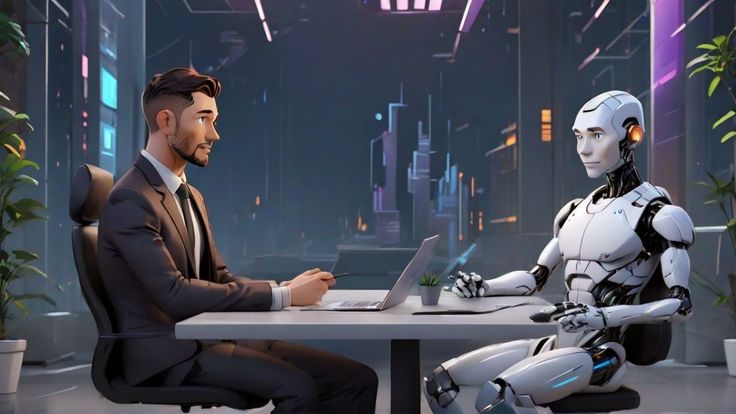
(pic=https://jobserver.ai/aduploads/image1_68d332e84e248.jpg)JOB MANAGEMENT DISCUSSIONS(/pic)
(h2)A Flatter Corporate Structure(/h2)
The ultimate implication of AI's rise is a fundamental reshaping of the corporate hierarchy itself. Companies may find that they can operate with fewer layers of management, creating a flatter, more agile organizational structure. With AI handling the bulk of the administrative and oversight tasks, a single senior manager could oversee a much larger team, with the individual contributors empowered to take on more responsibility.
This would lead to a more efficient and responsive organization, but it would also leave many traditional middle management roles obsolete. The path forward for companies will be to carefully navigate this transition, retaining the human element where it is most valuable, while embracing the efficiency that AI offers. The future of management will not be a death but a dramatic rebirth.


Category:
Other
Region:
Europe
Author:
blog@Jobserver.ai
Ad link: