
Artificial Intelligence Resumes Versus Inherent Human Bias in Hiring





Ad Spot Availabe




(hr)
(h2)The Promise of a Fairer Future(/h2)
The fundamental rationale for using AI in hiring is its capacity to process vast amounts of information without a conscious or unconscious predisposition. Human recruiters, for all their experience, often make snap judgments based on a candidate’s name, gender, age, or educational background. AI, in its idealized form, would be immune to such influences, focusing solely on the data that matters: a candidate’s skills, work experience, and qualifications.
(h3)Removing Human Subjectivity(/h3)
AI tools can be programmed to anonymize resumes by automatically stripping away personal identifiers like names, addresses, and graduation years. This forces a recruiter to evaluate a candidate based strictly on their professional merits. (link=https://jobserver.ai/adserved?id=65&The+Future+of+Hiring%3A+How+AI+is+Reshaping+Recruitment+in+2025)The technology can also be used to scan for specific keywords and quantifiable skills, theoretically creating a more objective ranking of candidates.(/link) Early studies and corporate pilot programs demonstrated that this approach could lead to a more diverse candidate pool, as it opened up opportunities for individuals who might have been overlooked in a traditional human-led review. This was the vision of a truly meritocratic system where the best candidate, regardless of their background, would rise to the top.
(hr)
(pic=https://jobserver.ai/aduploads/image2_68ad508849303.jpg)Applications(/pic)
(h2)The Peril of Amplified Bias(/h2)
The most significant flaw in the AI hiring model is not the technology itself, but the data it is trained on. AI systems learn to make decisions by analyzing a company's historical hiring data, and if that data is biased, the AI will learn to replicate those same biases. The problem is often described with the phrase, (b)“garbage in, garbage out.”(/b)
(h3)The Insidious Role of Proxy Variables(/h3)
Even when an AI is not explicitly programmed to consider gender or race, it can learn to do so through "proxy variables." For example, if a company has a history of hiring mostly men for a certain technical role, the AI may learn to favor resumes with characteristics that are more common among male candidates. This could include a candidate’s involvement in specific clubs, the use of certain vocabulary in their resume, or even the names of schools with a historically male-dominated student body. One famous example of this was a tool developed by Amazon that was eventually scrapped after it showed a strong bias against female candidates. It had learned from a decade's worth of resumes, which were predominantly from male applicants, and had taught itself to penalize resumes that included the word "women’s" or attended all-women colleges.
(h3)The Perpetuation of Existing Inequalities(/h3)
This is a critical point: AI does not create new biases; it (b)automates and amplifies(/b) the biases that already exist in our society. It takes the unconscious prejudices of human hiring managers and bakes them into an algorithm. The result is a system that can discriminate on a massive scale, with a speed and efficiency that no human could match. Furthermore, because the AI’s decision-making process is often opaque and lacks a clear rationale, it is incredibly difficult to identify and correct the underlying bias. This creates a new level of inequality that is difficult to challenge because it is masked by the veneer of technological objectivity.
(hr)
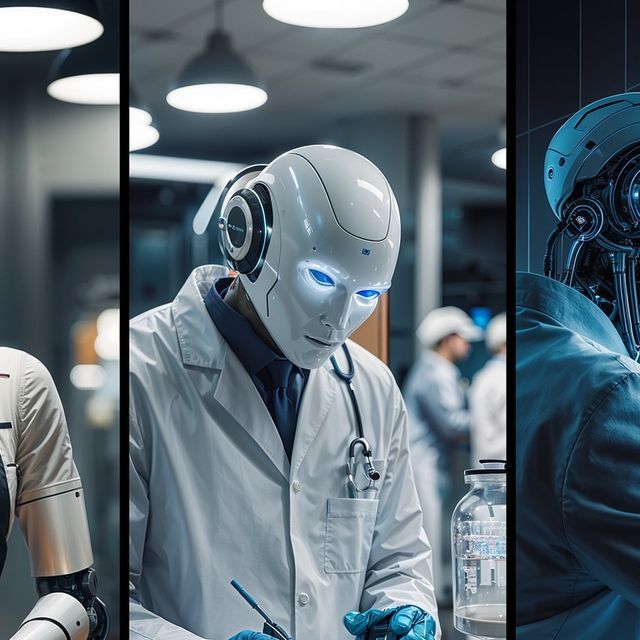
(pic=https://jobserver.ai/aduploads/image1_68d2c0093a42c.jpg)AI ON JOBS(/pic)
(h2)The Path Forward: Human Oversight and Ethical AI(/h2)
For AI to truly be a force for good in hiring, its implementation must be accompanied by rigorous oversight and a commitment to #EthicalAI. Simply introducing technology to a flawed system is not enough; the system itself must be re-evaluated and restructured.
(h3)Continuous Auditing and Data Correction(/h3)
Companies cannot simply deploy an AI system and assume it is fair. They must continuously audit the system's outcomes to ensure it is not systematically disadvantaging certain demographic groups. If bias is detected, the models must be retrained on more diverse and equitable datasets. This process is complex and resource-intensive, but it is the only way to ensure the technology is living up to its promise.
(h3)The Indispensable Role of Human Judgment(/h3)
Ultimately, AI-powered hiring tools should be seen as just that: tools. They should be used to assist human decision-makers by streamlining the initial stages of the recruitment process, but they should not be used as a final arbiter. The final decision to hire should always rest with a human, who can apply judgment, empathy, and contextual understanding that a machine simply cannot. A truly fair and effective hiring process will be a symbiotic one, combining the efficiency of AI with the irreplaceable wisdom and ethics of human oversight. The future of hiring is not about man versus machine, but about a new, more thoughtful collaboration.



Category:
Other
Region:
Australia
Author:
blog@Jobserver.ai
Ad link: