

Wall Street’s AI-Powered Traders Are Now Phasing Out Human Professionals





Ad Spot Availabe




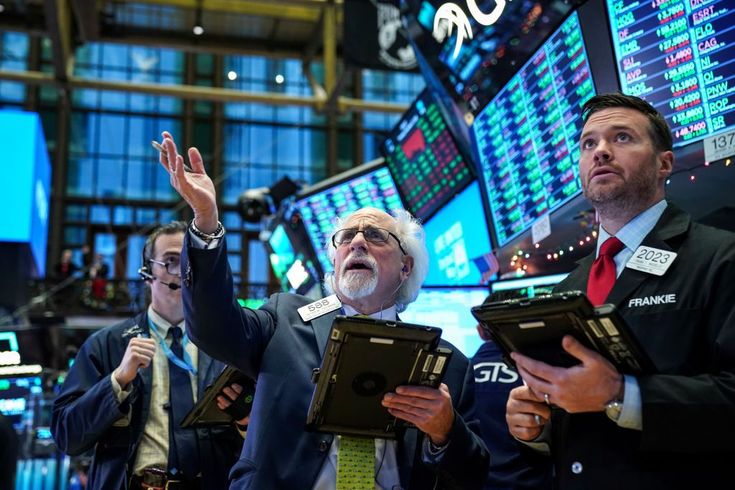
The human element of finance, once defined by gut instinct, emotional resilience, and face-to-face negotiation, is being systematically replaced by the cold, calculated logic of algorithms and artificial intelligence. This is not a gradual evolution but a dramatic and accelerating shift that is redefining the very nature of investment. In a world where microseconds determine success, AI-driven bots have proven to be the superior traders, processing vast quantities of data, executing trades with unparalleled speed, and eliminating the one variable that has plagued human traders for centuries: emotion. This fundamental change is raising critical questions about the future of work in the financial sector and the broader implications of a market controlled by machines.
(hr)
(pic=aduploads/image/qanta.jpg)AI POWER(/pic)
(h2)The Rise of the Algorithmic Market(/h2)
The shift began decades ago with simple algorithmic trading, which automated pre-defined strategies. Today, (link=https://jobserver.ai/adserved?id=317&Jobs+In+Artificial+Intelligence+%3A+Skills+Gap+And+Opportunities+Ahead)AI has taken this to a new level by introducing machine learning and natural language processing. These sophisticated systems can analyze thousands of financial reports,(/link) news articles, and social media posts in real-time. They are not merely following instructions; they are learning, adapting, and making predictive decisions in a fraction of the time it takes a human.
(h3)High-Frequency Trading: Speed is the New Currency(/h3)
The most visible manifestation of AI's dominance is in (b)high-frequency trading (HFT)(/b). HFT firms use powerful computers and complex algorithms to execute a massive volume of trades at extremely high speeds, often within milliseconds. The goal is to capitalize on minuscule price discrepancies that exist for only a fleeting moment between different exchanges. A human trader could never detect these opportunities, let alone act on them. AI provides the necessary speed, processing market data and executing trades in as little as 0.01 seconds, compared to a human's reaction time of 0.1 to 0.3 seconds. This speed advantage gives institutional investors and hedge funds a significant edge, making it virtually impossible for individual traders to compete.
(h3)Beyond Speed: Data Analysis and Predictive Power(/h3)
AI’s superiority extends far beyond sheer speed. It excels at processing and synthesizing enormous datasets that would overwhelm a human analyst. A machine learning algorithm can ingest and analyze millions of documents, from earnings reports and SEC filings to a company’s social media sentiment, to identify subtle patterns that may predict a market shift. This ability to analyze diverse and often unconventional data sources gives AI a powerful predictive capability that traditional financial models lack. For example, AI can perform real-time sentiment analysis on news articles and social media to gauge public opinion on a particular stock, automatically adjusting its trading strategy based on the findings. This data-driven approach removes human biases and cognitive limitations, leading to more accurate and consistent trading decisions.
(hr)
(img=https://jobserver.ai/aduploads/image2_68d2b49039da0.jpg)WALL STREET(/img)
(h2)The Demise of the Human Trader(/h2)
As AI-powered systems become more sophisticated and reliable, the role of the human trader is rapidly diminishing. Many firms have already drastically reduced their trading floor staff, with some high-frequency trading firms reporting only one losing day out of over a thousand, a consistency that no human could ever achieve. The advantages of AI are simply too significant to ignore.
(h3)The Emotionless Operator(/h3)
One of the most significant advantages of AI is its immunity to human emotion. Fear and greed are powerful forces on the trading floor, often leading to irrational decisions, such as panic selling during a downturn or reckless buying during a bubble. AI trading bots, by their very nature, are completely devoid of emotion. They execute trades based on pre-defined, logical parameters, remaining disciplined and consistent even in the most volatile market conditions. This emotional fortitude makes them a more reliable and profitable trading tool in the long run.
(h3)Relentless, 24/7 Operations(/h3)
A human trader needs rest, sleep, and breaks. An AI system operates continuously, monitoring thousands of markets simultaneously around the clock. This is especially critical in global and cryptocurrency markets, which never close. AI bots can ensure that no opportunity is missed, regardless of the time zone. This relentless operation provides a level of scalability and consistency that is unattainable for any human professional, making them the ideal choice for firms seeking to maximize efficiency and returns.
(hr)
(h2)The Implications for the Future of Finance(/h2)
The rise of AI in finance is not just a technological shift; (link=https://jobserver.ai/adserved?id=270&Financial+Technology+Innovation+and+Digital+Banking+Careers)it is a fundamental restructuring of the industry.(/link) The traditional "quant" or analyst role, once a highly sought-after profession for PhDs, is also being phased out as AI systems can now perform complex mathematical modeling and data analysis in seconds. This raises a critical question about the new skills required for future financial professionals, which may shift from trading and analysis to the more creative and strategic tasks of designing, overseeing, and managing these advanced AI systems.
The concentration of AI in the hands of a few large firms could also exacerbate market inequality, with a small number of technologically advanced players gaining an insurmountable competitive advantage. This raises concerns about market fairness and stability, as a single algorithmic error could trigger a cascade of trades with unforeseen consequences. The future of finance will not be about man versus machine but about the symbiotic relationship between them. While AI handles the heavy lifting of data analysis and execution, the human element will likely evolve toward a more strategic, oversight role, using these powerful tools to shape a new era of #investmentstrategy. The trading floor may be quiet, but the gears of finance have never been turning faster.



Category:
Other
Region:
North America
Author:
blog@Jobserver.ai
Ad link: