

The Imminent Collision Course of Decentralized Finance Versus Traditional Wall Street





Ad Spot Availabe




(hr)
(vimeo=https://vimeo.com/1120709763)(/vimeo)
(h2)The Foundations of Two Financial Worlds(/h2)
To understand the nature of this collision, one must first grasp the core philosophies that underpin each system. They are not merely different technologies; they represent competing ideologies about how money and value should be managed.
(h3)Traditional Finance: The Centralized Citadel(/h3)
Traditional Finance is a system of intermediaries. (link=https://jobserver.ai/adserved?id=292&The+Central+Bank+Dominance%3A+How+Monetary+Policy+Concentrates+Economic+Power)Banks act as trusted custodians of funds, brokerages facilitate the trading of securities, and clearinghouses settle transactions.(/link) This structure is built on a foundation of trust in institutions and is heavily regulated by government bodies to ensure stability and protect consumers. This centralized model, while slow and often expensive, has provided a measure of stability and security for global economies. It relies on a human-centric system of laws, contracts, and regulations to enforce rules and resolve disputes. The system’s strengths are its immense scale, its legal protections, and the public trust it has built over decades. Its weaknesses are its inherent inefficiencies, high transaction costs, and exclusivity to those who meet its stringent requirements.
(h3)Decentralized Finance: The Peer-to-Peer Paradigm(/h3)
DeFi, by contrast, is a radical departure from this model. It seeks to remove intermediaries altogether by using smart contracts on public blockchains. These self-executing contracts automate and govern financial transactions without the need for a central authority. Every transaction is recorded on an immutable ledger, and the rules are transparent and enforced by code, not lawyers. This permissionless nature means anyone, anywhere in the world with an internet connection, can access DeFi services for lending, borrowing, or trading. The system’s strengths are its speed, low cost, and radical inclusivity. Its weaknesses include the risks associated with smart contract bugs, a lack of consumer protection, and the volatility of the underlying digital assets. This #peer-to-peer approach is not just a technological innovation; it's a philosophical statement that aims to redistribute financial power from institutions to individuals.
(hr)
(h2)Points of Collision: A Battle for the Future(/h2)
The conflict between TradFi and DeFi is not a distant threat; it is already underway in several key areas. These points of friction highlight the fundamental incompatibility of their operating models.
(h3)Regulation Versus Code(/h3)
One of the most significant points of conflict is the tension between government regulation and the immutable nature of smart contracts. Regulators view DeFi as a Wild West of financial activity, ripe for illicit activity and consumer exploitation. (link=https://jobserver.ai/adserved?id=272&Coinbase+Security+Features+Every+Institutional+Crypto+Investor+Must+Understand)They seek to bring it under the same legal frameworks that govern TradFi.(/link) DeFi advocates argue that the code is the law, and that adding regulatory layers would compromise the very essence of decentralization. This clash of ideologies has led to ongoing legal battles and a state of regulatory uncertainty that hangs over the entire #DeFi space.
(h3)Efficiency and Speed Versus Trust and Stability(/h3)
DeFi platforms can execute transactions in seconds for a fraction of the cost of traditional wire transfers or international payments. This sheer efficiency is a powerful draw for both individuals and businesses. However, this speed often comes at the cost of stability. The cryptocurrency markets that underpin DeFi are notoriously volatile, and the lack of a central guarantor means a smart contract failure or a hack can result in catastrophic losses with no recourse. TradFi, while slow and cumbersome, offers a level of trust and legal recourse that DeFi cannot yet match. The trade-off is clear: speed and cost versus security and established trust.
(h3)Access and Inclusivity Versus Exclusivity(/h3)
For billions of people who are "unbanked" or "underbanked," DeFi offers an unprecedented opportunity to access financial services. All that is required is a smartphone and an internet connection. This starkly contrasts with the traditional financial system, which often requires significant documentation, a fixed address, and a certain level of income to open a bank account or secure a loan. By democratizing access to capital and financial tools, DeFi has the potential to become a powerful force for #financialinclusion on a global scale. This social aspect of the movement poses a direct moral and competitive challenge to the old guard, which has historically been exclusive by design.
(hr)
(pic=https://jobserver.ai/aduploads/image2_68d0d4c8403d5.jpg)DEFI(/pic)
(h2)The Inevitable Outcome: Absorption, Integration, or Coexistence?(/h2)
While some believe DeFi will completely supplant TradFi, a more nuanced reality is likely to unfold. The outcome of this collision will likely not be a total replacement but a complex negotiation and integration.
(h3)The Co-option Scenario(/h3)
History is full of examples of disruptive technologies being absorbed by incumbent industries. Just as the internet's early promise of a fully decentralized web was tempered by the rise of tech giants, some argue that TradFi will co-opt DeFi's innovations. Financial institutions are already exploring blockchain technology for their own purposes, such as tokenizing assets and improving settlement times. They may simply adopt the most efficient elements of DeFi while maintaining their centralized control, legal frameworks, and regulatory oversight, effectively neutering the movement’s radical spirit.
(h3)The Hybrid Future(/h3)
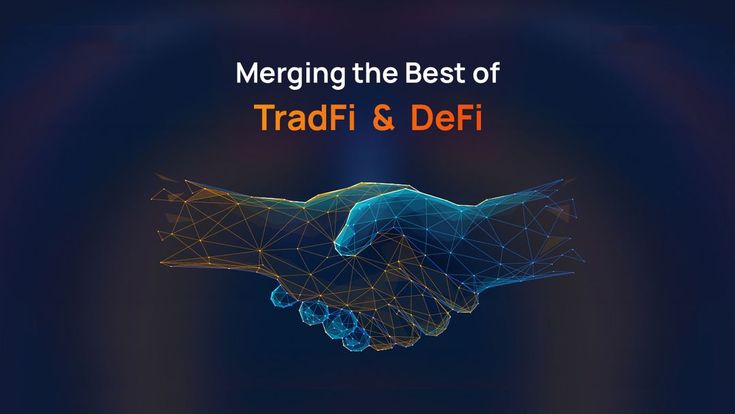
The most probable scenario is a future where the two systems coexist in a hybrid model. Financial institutions are already exploring the use of DeFi protocols for specific functions, such as international settlements or lending between corporate entities. Meanwhile, DeFi is slowly beginning to recognize the need for certain elements of TradFi, such as identity verification and robust consumer protections, to attract a wider audience. The future is likely to see institutions building on public blockchains and integrating with decentralized protocols, creating a more efficient and globally accessible financial system without completely abandoning the established safeguards. This fusion could harness the efficiency of code while retaining the necessary human elements of trust and accountability.



Category:
Other
Region:
North America
Author:
blog@Jobserver.ai
Ad link: