
Google’s Entrenched Information Monopoly in a Rapidly Evolving Artificial Intelligence Age





Ad Spot Availabe




(link=https://jobserver.ai/company?id=22&Google+LLC)Google,(/link) a name that has become a verb for "to search," holds a commanding position over the flow of digital information. For decades, its search engine has been the primary gateway to the internet, a position cemented by its massive market share and sophisticated algorithms. However, in the age of artificial intelligence, (link=https://jobserver.ai/company?id=22&Google+LLC)Google(/link) is not content with its current dominance; it's aggressively working to (link=https://jobserver.ai/adserved?id=355&Google+Ads+vs+SEO%3A+Which+is+Better+for+Small+Businesses+in+2025%3F)ensure its supremacy extends to the new paradigm(/link) of generative AI. By controlling both the traditional search landscape and many of the foundational large language models (LLMs), (link=https://jobserver.ai/company?id=22&Google+LLC)Google(/link) is consolidating an information monopoly that could shape how humanity accesses and processes knowledge for decades to come. This strategic move leverages its historical strengths, data, computing power, and market reach, to create a powerful and difficult-to-challenge new kind of ecosystem.
(hr)
(h2)The Search Engine's Foundation: A Data-Driven Advantage(/h2)
(link=https://jobserver.ai/company?id=22&Google+LLC)Google’s(/link) historic dominance in the search market is no accident. It’s the result of a self-reinforcing cycle built on data. The more people use (link=https://jobserver.ai/company?id=22&Google+LLC)Google(/link) to search, the more data Google collects on search queries, user behavior, and click patterns. This vast trove of information allows the company to continuously refine its algorithms, making its search results even more accurate and relevant. (link=https://jobserver.ai/adserved?id=126&Google%27s+AI+Empire%3A+Search%2C+Privacy%2C+and+Information+Governance+Careers)This creates a superior product that attracts more users, perpetuating the cycle.(/link) This data advantage is immense; as of this year, Google still processes a staggering volume of searches daily, far outstripping its nearest rivals. This unparalleled access to what people are looking for on the internet gives (link=https://jobserver.ai/company?id=22&Google+LLC)Google(/link) a crucial #dataleverage in the AI race, as large datasets are the most critical input for training powerful LLMs.
(h3)The Vicious Cycle of Search Dominance(/h3)
The company’s monopoly in traditional search is not just a function of its algorithm; it’s also the result of strategic, and sometimes legally contentious, business practices. By paying billions of dollars to companies like (link=https://jobserver.ai/company?id=21&Apple+Inc)Apple(/link) to be the default search engine on their devices, Google has secured a privileged position that forecloses competition. This has led to antitrust lawsuits in both the U.S. and Europe, where regulators argue that such exclusionary contracts stifle innovation and harm consumers. Despite these legal challenges, Google has largely maintained its position, arguing that the threat from new AI-powered "answer engines" is proof that its monopoly is not as permanent as regulators claim. However, this argument may be a red herring, as (link=https://jobserver.ai/company?id=22&Google+LLC)Google(/link) is using its search dominance to power its AI ambitions.
(hr)
(h2)AI: The New Frontier of Information Control(/h2)
Google is not just an observer in the AI revolution; it is a primary architect. The company has invested billions into developing its own foundational models, with its Gemini family of LLMs being a central pillar of its strategy. By integrating these models directly into its core products, Google is ensuring that the transition from traditional search to AI-powered query answering happens on its own terms and within its own ecosystem. This is a crucial step in maintaining its monopoly.
(h3)From Links to Generative Answers(/h3)
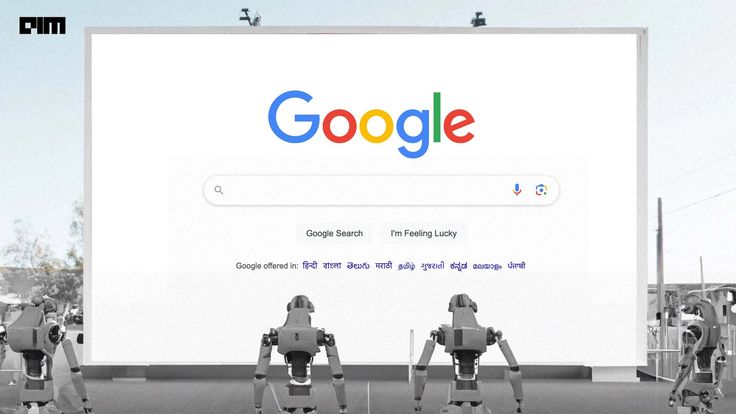
In traditional search, a user query generates a list of links. The user then has to navigate away from Google’s page to find the answer. With the advent of AI, (link=https://jobserver.ai/company?id=22)Google(/link) is shifting to a new model, exemplified by features like its Search Generative Experience (SGE). In this model, the query generates a single, synthesized answer directly on the search results page, often with a few links for citation. This new approach, while convenient for users, has significant implications. It keeps users on Google’s platform for longer, reducing traffic to external websites. This is a direct threat to the open web and the content creators who rely on organic search traffic for their business models. By providing the "answer" rather than the "gateway," Google fundamentally changes its role from a navigator to a content provider, using its vast search index to train and ground its AI models without explicit permission from publishers.
(vimeo=https://vimeo.com/1120703101)(/vimeo)
(h3)The Hardware and Software Integration(/h3)
Google’s control over the information pipeline extends to its hardware and software. Its Android operating system, for instance, provides a massive platform for integrating its AI services directly into billions of mobile devices worldwide. This vertical integration allows Google to collect data, train its models, and serve its AI products in a seamless, end-to-end user experience. The company’s internal documents have also revealed a clear strategy to use its dominance to feed its AI models, sometimes bypassing standard web protocols. This aggressive data acquisition strategy, combined with its immense computing power, gives Google a significant advantage over smaller startups and rivals in the #AIrace.
(hr)
(h2)The Implications for the Future of Knowledge(/h2)
Google’s dual control over search and generative AI raises serious questions about the future of information access. A company with the power to curate, summarize, and present information in a single, definitive answer could become the ultimate arbiter of truth and knowledge. This concentration of power in a single entity presents a potential risk to the diversity of viewpoints and the open exchange of ideas that have historically defined the internet. If AI-powered search becomes the default method for finding information, the sources and perspectives that Google's models choose to prioritize or de-prioritize could have a profound impact on public discourse and education. The future of the internet may not be a series of interconnected websites but a centralized, AI-driven information hub.


Category:
Other
Region:
North America
Author:
blog@Jobserver.ai
Ad link: