

The Neurocapitalism Frontier: Brain-Computer Interface Concentration





Ad Spot Availabe




Throughout history, economic power has flowed toward whoever could capture scarce resources. Land, oil, and data have all served as foundations of dominance. Today, the frontier has shifted inward. Brain-computer interfaces promise to link machines directly with thought, turning cognition itself into an asset. The firms leading this race are not simply (link=https://jobserver.ai/adserved?id=211&The+Medical+Device+Oligarchy%3A+Innovation+and+Risk+in+a+Concentrated+Market)innovating, they are concentrating access to the most intimate dimension of human experience.(/link) In this emerging system, #neurocapitalism becomes the organizing principle.
(vimeo=https://vimeo.com/1118425249)(/vimeo)
(h2)How Brain-Computer Interfaces Work(/h2)
At their core, brain-computer interfaces (BCIs) decode neural signals and translate them into commands for digital systems. The potential spans medical treatment, enhanced communication, and even consumer applications. A paralyzed patient could move a robotic arm through thought, while a gamer might one day control characters without a controller.
(h3)Invasive and Non-Invasive Models(/h3)
(li)Invasive devices use implanted electrodes to capture precise neural activity, often with surgical risks(/li)
(li)Non-invasive approaches, like EEG headsets, trade accuracy for accessibility(/li)
(li)Hybrid models experiment with minimally invasive sensors to balance safety and fidelity(/li)
The engineering challenge is vast, but the strategic outcome is clear. Whoever controls the best interface gains ownership over streams of neural data, effectively transforming #cognitiveaccess into a proprietary resource.
(hr) (h2)The Concentration of Innovation(/h2)
Despite the futuristic aura, the field is already narrowing. A small cluster of well-capitalized firms lead development, from Silicon Valley startups to multinational tech corporations. High costs of research, specialized talent pools, and complex regulatory requirements create steep barriers to entry.
(h3)Capital Requirements(/h3)
Developing viable BCIs demands billions in investment across neuroscience, hardware, and AI. Venture capital flows toward firms with established reputations, amplifying concentration.
(h3)Data Monopolies(/h3)
Training BCIs requires enormous datasets of neural activity. Once collected, these datasets become exclusive assets that smaller competitors cannot easily replicate. The control of #neuraldata echoes earlier dynamics in digital monopolies, where data concentration created self-reinforcing advantages.
(h3)Regulatory Navigation(/h3)
Governments treat BCIs as both medical devices and potential security risks. Navigating safety approvals and ethical reviews favors companies with deep legal expertise and political influence, further consolidating the field.
(hr) (h2)The Ethical Fault Lines(/h2)
Brain-computer interfaces raise ethical stakes far beyond previous technologies. The concentration of this power introduces risks of surveillance, manipulation, and exploitation at the level of thought itself.
(li)Privacy concerns extend to the raw content of cognition(/li)
(li)Consent becomes murky when thoughts can be recorded or inferred(/li)
(li)Commercial models risk prioritizing entertainment or defense over medical care(/li)
The social implications are profound. If #mentalprivacy becomes commodified, individuals may lose autonomy not just over their digital identity but over their innermost experiences.
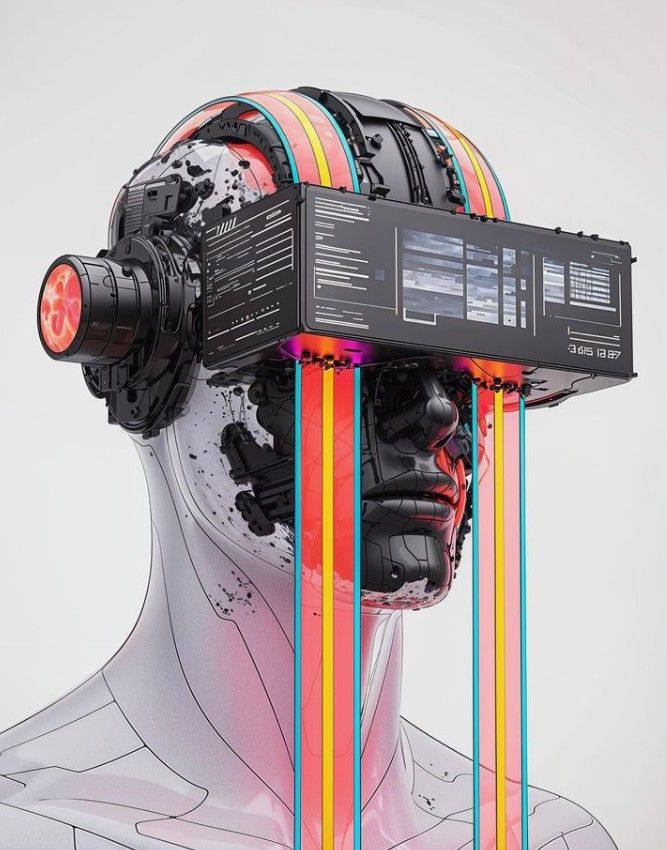
(pic=https://jobserver.ai/aduploads/image2_68c605279ac56.jpg)BRAIN AND COMPUTER(/pic)
(hr) (h2)From Medical Promise to Market Control(/h2)
The initial promise of BCIs is (link=https://jobserver.ai/adserved?id=247&Genomic+Data%3A+The+Next+Frontier+of+Corporate+Concentration)1therapeutic, restoring mobility, speech, and sensory functions.(/link) Yet history shows how medical technologies often migrate quickly into consumer and military domains. Entertainment industries see opportunities for immersive gaming, while defense sectors envision enhanced soldier performance.
This migration creates tension between public good and private concentration. A handful of firms may dictate not only who gets access to advanced therapies but also how cognitive technologies reshape culture, labor, and security. The infrastructure of #mindmachineinterfaces is too consequential to remain in the hands of a select few without broader oversight.
(hr) The frontier of neurocapitalism is defined by both extraordinary promise and unprecedented risk. The concentration of brain-computer interface technology reflects a broader pattern: innovation narrows toward the companies with the capital, data, and regulatory capacity to dominate. As humanity edges closer to direct integration with machines, the critical question is not whether BCIs will arrive, but who will control them; and by extension, who will control the very architecture of thought.



Category:
Other
Region:
North America
Author:
blog@Jobserver.ai
Ad link: