

What is Google Ads Performance Max Campaigns And The Best Way to Implement





Ad Spot Availabe




(hr)
Digital marketing continues to evolve as companies look for ways to maximize reach while reducing complexity. Businesses are constantly under pressure to adapt their advertising strategies to consumer behavior, which has shifted toward multi-channel engagement across mobile, video, and search. A system that allows marketers to run one campaign while reaching audiences across all major Google platforms is therefore highly valuable.
One of the strongest solutions available is Performance Max, a campaign type within (b)(link=https://jobserver.ai/company?id=22)Google(/link)(/b) Ads that uses machine learning and automation to simplify campaign management. It enables advertisers to unify their efforts while benefiting from optimized placements across Search, YouTube, Display, Gmail, Maps, and Discover.
The focus of this article will be to explain 7 important steps about Performance Max campaigns and the best ways to implement them.
(img=aduploads/image/max 1.jpg)Performance Max campaigns help businesses streamline advertising across Google channels(/img)
(hr)
(h2)Understanding Performance Max Campaigns(/h2)
Performance Max campaigns are designed to provide access to all Google inventory within a single campaign structure. This includes ad placements in Search and Search Partners, YouTube, Shopping, Gmail, Maps, and Display. Unlike traditional campaigns that require individual setups, Performance Max uses automation to distribute ads across these platforms.
According to (b)(link= https://www.searchenginejournal.com/google-performance-max/498283/)Search Engine Journal(/link)(/b), this type of campaign leverages Google’s artificial intelligence to optimize for conversions, making it a complementary tool alongside existing Search campaigns. It ensures broader reach and allows advertisers to find new audiences who may not be captured through regular search campaigns.
The system works through machine learning, analyzing real-time signals such as location, device, and intent. This allows Google to show ads at the right time and place, improving conversion opportunities for advertisers. This makes #Google Ads one of the most versatile and efficient tools for digital marketing today.
(hr)
(h2)Setting Objectives for Campaigns(/h2)
Before launching a Performance Max campaign, advertisers need to define their goals clearly. Objectives may include increasing online sales, generating leads, or driving traffic to physical stores. Clear objectives guide the automation process and ensure that the machine learning system is optimizing toward measurable outcomes.
When businesses identify precise goals, it also improves the accuracy of performance tracking. For example, a company focusing on lead generation must have conversion tracking set up properly to measure form fills, calls, or sign-ups. Without this, optimization will be limited and campaign results will fall short.
Since (b)(link=https://jobserver.ai/company?id=22)Google(/link)(/b) relies heavily on data input, providing accurate objectives aligns the advertiser’s strategy with the system’s automation. This cooperation ensures both efficiency and accountability in achieving campaign success.
(hr)
(h2)Building Strong Asset Groups(/h2)
Assets are the creative elements that make up a campaign, such as headlines, images, videos, and descriptions. Performance Max uses these assets to automatically generate ad variations across multiple platforms. This ensures that ads are adapted to the format and style of each channel.
A strong asset group allows advertisers to maintain creative flexibility. For example, a video asset will perform well on YouTube, while headlines and images are more effective in Display and Search. The variety of assets ensures that the campaign delivers consistent results regardless of the channel.
High-quality creative content is crucial because the system tests combinations of assets and favors those with better engagement. Advertisers who fail to provide strong visuals and copy risk limiting their campaign’s reach. This highlights the importance of investing in diverse and compelling creative elements for #ads optimization.
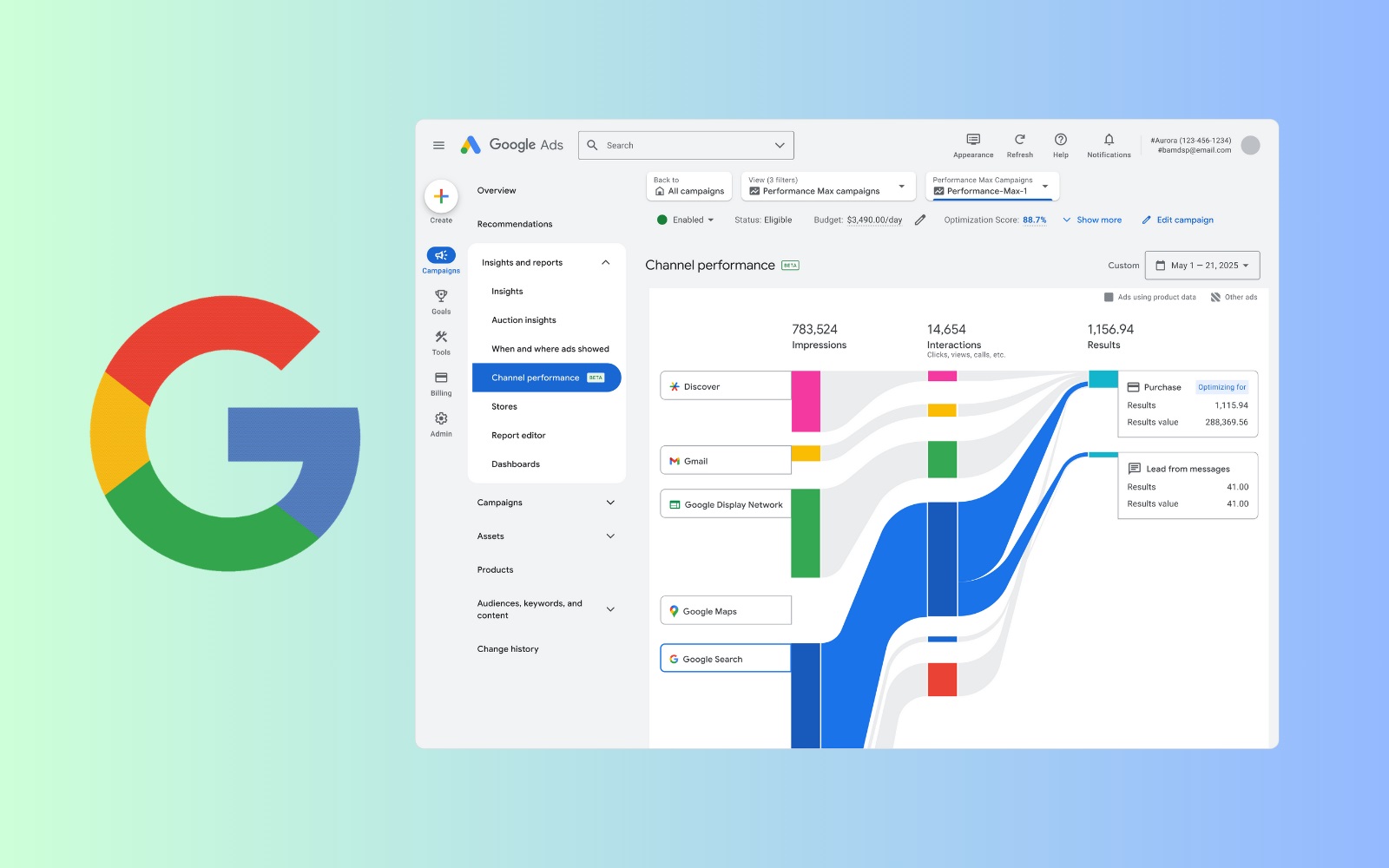
(img=aduploads/image/max 2.jpg)Quality asset groups ensure better performance across YouTube, Search, and Display(/img)
(hr)
(h2)Using Audience Signals(/h2)
Audience signals help guide Performance Max campaigns toward valuable prospects. Advertisers can supply data such as customer lists, demographics, and interests to accelerate the learning phase of the system. While Google’s automation can find audiences independently, audience signals provide a strong starting point.
These signals allow the system to target people who are more likely to convert. For instance, uploading a customer list of previous buyers helps Google expand to similar audiences. This not only improves efficiency but also reduces wasted ad spend.
Over time, the automation refines audience targeting based on performance data. The initial audience signals simply guide the system in the right direction, which helps maximize early results and ensures stronger long-term optimization.
(hr)
(h2)Tracking and Measuring Conversions(/h2)
Effective tracking is central to any advertising campaign, and Performance Max is no exception. Advertisers must ensure that conversion tracking is properly set up to measure key actions such as purchases, sign-ups, or calls. Without reliable tracking, the system cannot optimize effectively.
One advanced tool for tracking is data-driven attribution. Instead of crediting the last click, this model evaluates the role of multiple touchpoints in the customer journey. This provides a clearer understanding of which channels and ads contribute most to conversions.
Accurate measurement also enables ongoing improvements. Advertisers can identify underperforming assets or placements and make adjustments. With continuous monitoring, campaigns remain aligned with business goals and customer behavior.
(hr)
(h2)Budgeting and Bidding Strategies(/h2)
Budgeting plays a key role in Performance Max campaigns. Since the system automatically distributes spend across channels, advertisers must allocate budgets that reflect their objectives. Setting a budget too low can limit reach, while overspending without clear direction may reduce efficiency.
Performance Max supports automated bidding strategies such as maximize conversions or target return on ad spend (ROAS). Advertisers must select the strategy that aligns with their campaign goals. For example, maximize conversions may be ideal for lead generation, while target ROAS suits revenue-focused campaigns.
As campaigns progress, advertisers can adjust budgets and bidding strategies based on results. This adaptability ensures better alignment with market trends and business objectives, while allowing for more control over cost efficiency.
(hr)
(h2)Creative Testing and Messaging(/h2)
Campaign performance is strongly influenced by the quality of ad messaging and design. Performance Max campaigns rely on advertisers to supply diverse and effective assets, which Google’s system then tests and optimizes. Creative testing ensures that the strongest variations are shown more frequently.
A clear and compelling value proposition is vital. Ads should communicate benefits, solutions, or unique selling points in a way that connects with the target audience. Creative content that lacks clarity or relevance often results in lower engagement.
In a competitive digital market, advertisers must continually refresh messaging to maintain interest. Storytelling, emotional appeal, and strong visuals can help differentiate brands and achieve stronger conversion rates. The #marketing ecosystem thrives on creativity and authenticity, making these elements essential in campaign success.
(hr)
(h2)Ongoing Optimization and Insights(/h2)
Performance Max campaigns require continuous monitoring and refinement. Advertisers should regularly analyze reports within Google Ads to identify trends, evaluate performance, and adjust strategies accordingly.
Ongoing optimization may include updating audience signals, refreshing creative assets, or reallocating budget toward high-performing placements. This process ensures campaigns adapt to changing customer behaviors and market conditions.
Essentially, advertisers who actively engage in optimization achieve higher returns. The balance of automation and human oversight creates a system that improves efficiency and maintains strong performance across all channels.


Category:
Announcement
Region:
Europe
Author:
blog@Jobserver.ai
Ad link: