

Ranking the Top 10 Google Innovations in AI and Technology





Ad Spot Availabe




(hr)
Artificial intelligence has become a pivotal force in modern technology, and Google stands at the forefront of this transformation. Over the past decade, the company has pushed boundaries, introducing innovations that have not only reshaped its own products but also influenced global tech trends. These breakthroughs demonstrate how AI can enhance productivity, communication, and creativity across various industries.
From intelligent personal assistants to advanced machine learning frameworks, Google's technological advancements have changed the way individuals and businesses interact with information. The company has consistently focused on creating tools that are accessible, intuitive, and capable of learning and evolving over time. Each innovation highlights Google's commitment to harnessing the potential of AI to solve real-world problems.
The impact of Google’s AI innovations extends beyond software. The integration of AI into hardware, cloud services, and even medical research showcases the company’s holistic approach to technology. Through these developments, Google has established itself as not only a leader in search and advertising but also a key driver in shaping the future of artificial intelligence.
This article will explore the top 10 (b)(link=https://jobserver.ai/company?id=22)Google(/link)(/b) innovations in AI and technology, examining how each has contributed to transforming industries and improving daily life. Additionally, it will provide insight into the strategic vision and forward-thinking approach that has made these innovations possible.
(hr)
(h2)1. Google Search AI Enhancements(/h2)
Google Search remains one of the most widely used tools globally, and AI has dramatically improved its capabilities. Machine learning algorithms now understand context and semantics, allowing users to receive more accurate and relevant results. These enhancements reduce the time spent searching for information and increase overall productivity.
The integration of AI into search includes natural language processing, which enables the engine to comprehend questions in a conversational manner. Users can type queries as they would speak, and Google can interpret intent with impressive precision. This development has made information retrieval more intuitive than ever.
Beyond textual search, AI also powers visual and voice search capabilities. Image recognition, powered through deep learning, allows users to search for products, landmarks, or even animals using photographs. Voice-activated searches further streamline access to information, demonstrating the practical applications of AI across multiple formats.
(hr)
(h2)2. Google Assistant(/h2)
Google Assistant has transformed how users interact with technology in daily life. It functions as an intelligent personal assistant that can schedule tasks, provide information, and control smart devices effortlessly. AI enables the assistant to learn preferences and adapt responses over time, making interactions more personalized and efficient.
Voice recognition technology ensures that Google Assistant accurately understands diverse accents and dialects. This inclusivity expands usability across the globe, offering an accessible AI tool for millions of users. In addition, the assistant integrates with other Google services, creating a seamless ecosystem for productivity and entertainment.
(pic=https://jobserver.ai/aduploads/image2_68b7b416327ab.jpg)Google Assistant is one of Google's innovative products(/pic)
The AI capabilities of Google Assistant extend to proactive suggestions. It anticipates user needs by analyzing routines, locations, and contextual information, helping users stay organized and informed. This predictive intelligence exemplifies the potential of AI to enhance decision-making and daily efficiency.
(hr)
(h2)3. TensorFlow(/h2)
TensorFlow is an open-source AI framework that has revolutionized machine learning development. It provides developers with tools to design, train, and deploy AI models efficiently. Its flexibility allows for a wide range of applications, from natural language processing to computer vision.
Google’s release of TensorFlow has democratized access to advanced AI tools. Researchers, startups, and large enterprises can now leverage the same technology used internally at Google, fostering innovation across sectors. TensorFlow’s community-driven approach encourages collaboration and knowledge sharing, accelerating progress in AI research.
Moreover, TensorFlow’s scalability ensures that models can run on multiple platforms, including mobile devices, cloud systems, and on-premises servers. This adaptability allows developers to implement AI solutions for diverse environments and real-world challenges, enhancing practical usability and impact.
(hr)
(h2)4. Google DeepMind(/h2)
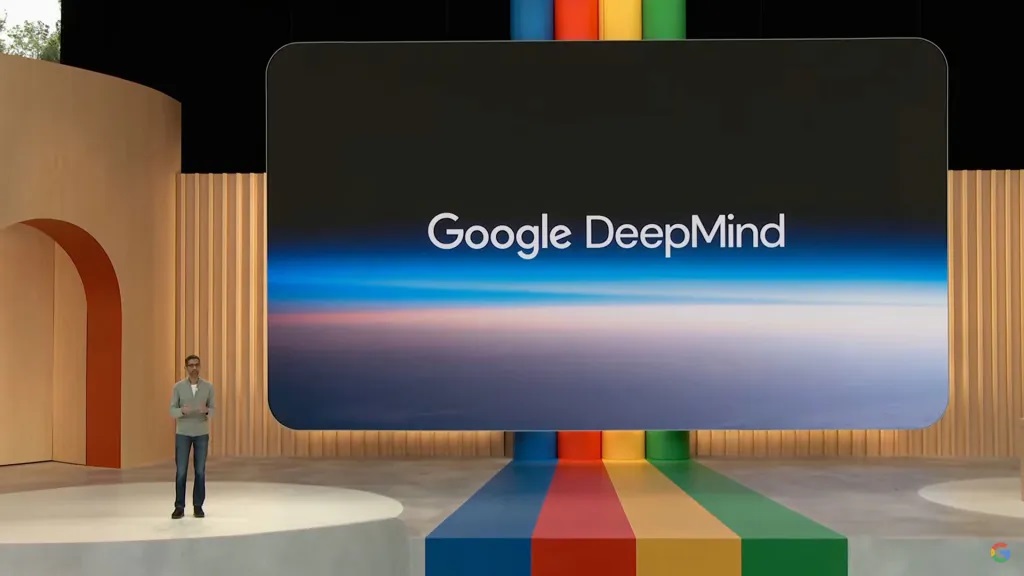
DeepMind represents (b)(link=https://www.forbes.com/sites/saibala/2024/09/10/googles-ai-research-arm-deepmind-is-making-rapid-progress-in-biology-and-drug-discovery/)Google’s ambitious effort to create AI (/link)(/b) capable of solving complex problems. Its projects focus on advanced neural networks and reinforcement learning techniques. Breakthroughs like AlphaGo have demonstrated the ability of AI to outperform humans in strategic games, highlighting the potential of AI in critical thinking and decision-making.
The applications of DeepMind extend to healthcare, energy management, and scientific research. AI models are used to predict protein structures, optimize energy consumption, and assist in diagnosing medical conditions. These innovations showcase the real-world implications of AI beyond traditional computing tasks.
(pic=https://jobserver.ai/aduploads/image1_68b7b4163136c.jpg)Google Deepmind is one of Google's innovative products(/pic)
DeepMind also emphasizes ethical AI development, ensuring that advancements are safe and aligned with human values. The research conducted here reflects Google’s commitment to responsible innovation and sets a benchmark for AI safety and governance in the industry.
(hr)
(h2)5. Google Cloud AI(/h2)
(b)(link=https://jobserver.ai/company?id=22)Google(/link)(/b) Cloud AI offers businesses access to powerful machine learning tools without requiring in-house expertise. These cloud-based services allow organizations to analyze large datasets, automate processes, and implement predictive analytics with ease. The platform’s scalability supports startups and large corporations alike.
The AI infrastructure in Google Cloud includes pre-built models and APIs for natural language understanding, vision analysis, and translation services. This reduces the technical barriers to implementing AI solutions and accelerates digital transformation across industries.
Integration with other Google services creates a unified ecosystem, allowing seamless data processing and insights generation. Companies can leverage AI to enhance decision-making, customer experience, and operational efficiency, demonstrating the practical advantages of cloud-based intelligence.
(hr)
(h2)6. Google Translate AI(/h2)
Google Translate utilizes AI to deliver accurate and contextual language translation. Neural machine translation models enable the system to consider entire sentences rather than individual words, improving fluency and meaning. Users experience translations that feel natural and coherent.
The AI system continuously learns from user feedback, improving translation quality over time. It supports over a hundred languages, promoting global communication and cultural exchange. In addition, integration with other Google tools enhances accessibility and convenience.
Google Translate AI is particularly valuable for travelers, businesses, and educational purposes. Its ability to interpret idiomatic expressions and context ensures reliable and practical translations, showcasing how AI can bridge linguistic gaps efficiently.
(hr)
(h2)7. Google Lens(/h2)
Google Lens allows users to interact with the physical world through AI-powered image recognition. By scanning objects, text, or landmarks, the application provides relevant information, enhancing learning and discovery.
(pic=https://is1-ssl.mzstatic.com/image/thumb/Purple211/v4/3b/7b/de/3b7bde0f-3a08-1787-ba21-81ceb31f155d/AppIcon-0-0-1x_U007ephone-0-11-0-85-220.png/1200x630wa.png)Google Lens is one of Google's innovative products(/pic)
The AI algorithms analyze visual data in real-time, identifying patterns, extracting text, and offering actionable insights. This functionality turns smartphones into intelligent tools capable of understanding the environment with precision.
Google Lens integrates with other services, such as search and shopping platforms, making it easier to explore products, obtain directions, or access detailed information. This innovation exemplifies practical AI applications that improve daily life and productivity.
(hr)
(h2)8. AutoML(/h2)
AutoML enables users to create custom machine learning models without extensive programming knowledge. It automates model selection, training, and optimization, making AI accessible to a broader audience.
Businesses can implement AutoML to solve unique problems, analyze complex datasets, and generate predictive insights. This reduces development time while maintaining high accuracy and performance.
The platform promotes experimentation and innovation, allowing organizations to explore AI applications in various sectors. By lowering technical barriers, AutoML empowers teams to harness AI for practical and strategic purposes efficiently.
(hr)
(h2)9. Google AI Ethics and Responsible Innovation(/h2)
Google has established principles for ethical AI development, focusing on transparency, fairness, and accountability. These guidelines ensure that innovations prioritize safety and societal benefit.
The company conducts rigorous research to prevent bias in AI models and to promote responsible decision-making. This proactive approach enhances public trust and supports sustainable technology adoption.
Ethical AI initiatives also include partnerships with academic institutions and NGOs, fostering collaborative efforts to address global challenges. Google’s commitment demonstrates how AI can be developed responsibly while driving technological progress.
(hr)
(h2)10. Project Starline(/h2)
Project Starline is an ambitious Google initiative aiming to create immersive communication experiences. Using AI, 3D imaging, and real-time data processing, it allows users to feel as if they are sitting next to someone in virtual space.
This technology represents a significant leap in telepresence, enhancing remote collaboration and reducing the need for travel. AI algorithms reconstruct realistic human expressions and gestures, improving interaction authenticity.
Project Starline illustrates Google’s dedication to pushing technological boundaries, blending hardware and AI to transform communication. Its potential applications range from business meetings to social interactions, redefining how humans connect digitally.
(hr)
(i)#GoogleAI #AIInnovation #TechLeadership #FutureOfAI(/i)


Category:
Announcement
Region:
Africa
Author:
blog@adserver.com
Ad link: