

How Corporate AI Integration is Reshaping Global Labor Markets in 2025





Ad Spot Availabe




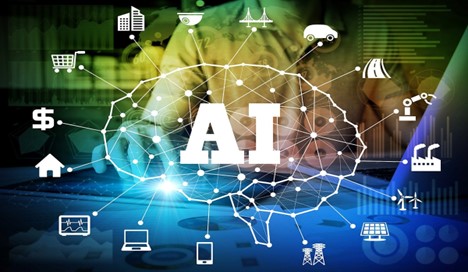
The transformation extends far beyond Silicon Valley boardrooms. Manufacturing plants in Ohio deploy AI-powered robots alongside human workers. Banks in London use machine learning algorithms to process loan applications that once required teams of analysts. Retail giants automate customer service functions that previously employed thousands of representatives. These changes create ripple effects that touch every corner of the global economy.
(img=https://jobserver.ai/aduploads/image1_68b2f5488eb53.png)(/img)
(h2)The Scale of Corporate AI Adoption(/h2)
Multinational corporations lead this technological revolution with unprecedented speed and scale. For the first seven months of 2025, rising adoption of generative AI technology by private employers accounted for more than 10,000 job cuts, according to industry reports. This figure represents just the beginning of a broader transformation affecting millions of workers worldwide.
Companies implement AI solutions for compelling business reasons.
• Operational costs decrease significantly when machines handle routine tasks
• Processing speed increases exponentially compared to human capabilities
• Error rates drop to near-zero levels for data-heavy operations.
These advantages drive corporate executives to accelerate AI integration across departments and geographical regions.
The adoption pattern reveals interesting sectoral variations. Technology firms naturally embrace AI fastest, with finance and healthcare following closely. Manufacturing companies integrate robotic systems to enhance production efficiency. Even traditionally human-centered industries like agriculture and mining now employ AI tools for optimization and safety improvements.
(h2)Job Market Displacement Patterns(/h2)
The employment impact manifests differently across job categories and skill levels. Entry-level jobs, disproportionately filled by young workers, are especially at risk, with nearly 50 million U.S. jobs affected. This statistic reveals how AI disproportionately targets positions requiring repetitive tasks or basic analytical skills.
• Customer service representatives face immediate pressure as chatbots handle routine inquiries.
• Data entry clerks see their roles eliminated through automated processing systems.
• Junior financial analysts watch algorithms perform calculations that once required hours of human work.
These changes force workers to adapt quickly or risk professional obsolescence. However, the displacement pattern creates unexpected opportunities. The (link=https://www.weforum.org/stories/2025/01/future-of-jobs-report-2025-jobs-of-the-future-and-the-skills-you-need-to-get-them/)World Economic Forum(/link) forecasts that 97 million jobs will be created globally due to AI. New positions emerge in several key areas:
• AI management and system oversight roles
• Algorithm training and machine learning specialization
• Human-machine collaboration coordination
Companies need specialists to oversee AI systems, interpret machine outputs, and handle complex customer issues that exceed AI capabilities.
(h2)Skills Evolution and Worker Adaptation(/h2)
The changing job market demands rapid skill development from existing workers. Technical literacy becomes essential even for non-technical roles. Workers must learn to collaborate with AI systems rather than compete against them. This shift requires both individual initiative and corporate investment in training programs.
(link=https://seo.ai/blog/ai-replacing-jobs-statistics)14% of workers(/link) have experienced job displacement due to AI, highlighting the current reality rather than future speculation. Yet successful adaptation stories emerge across industries. Marketing professionals learn to use AI for content generation while focusing on strategic creativity. Healthcare workers employ diagnostic AI tools to enhance patient care rather than replace medical judgment.
Companies that invest in employee retraining demonstrate better outcomes for both business performance and worker satisfaction. These organizations create internal mobility pathways that help displaced workers transition to AI-adjacent roles. Training programs focus on uniquely human skills that complement rather than compete with artificial intelligence capabilities.
(h2)Global Economic Redistribution(/h2)
The AI transformation reshapes economic power distribution on a global scale. Developing nations with strong technical education systems attract AI development investments. Countries with robust digital infrastructure become attractive locations for AI-driven operations. This geographic redistribution affects traditional manufacturing centers and service economies differently.
(img=https://jobserver.ai/aduploads/image2_68b2f5488f603.jpg)(/img)
Wage structures evolve as AI skills command premium compensation. Workers who successfully adapt to AI-enhanced roles often earn higher salaries than their predecessors. However, those unable to transition face reduced employment opportunities and income potential. This bifurcation creates new forms of economic inequality based on technological adaptation capabilities.
(h2)Corporate Strategy Implications(/h2)
Business leaders must balance automation benefits with workforce stability concerns. Companies that implement AI thoughtfully maintain better employee relations and public reputation. Strategic considerations include:
• Gradual integration rather than wholesale replacement
• Investment in change management programs for workers
• Viewing AI as enhancement tools rather than human substitutes
These approaches prove more sustainable than abrupt automation deployments that generate organizational disruption.
(h2)Looking Forward(/h2)
The corporate AI revolution continues accelerating through 2025 and beyond. Success depends on how well companies manage the human element of technological change. Organizations that view AI as a tool to enhance human capabilities rather than replace workers entirely position themselves for long-term success.
This transformation demands new approaches to corporate responsibility, worker development, and economic policy. The companies that thrive will be those that harness AI power while maintaining their commitment to human potential and societal stability.



Category:
Other
Region:
Africa
Author:
samueltoil001@gmail.com
Ad link: